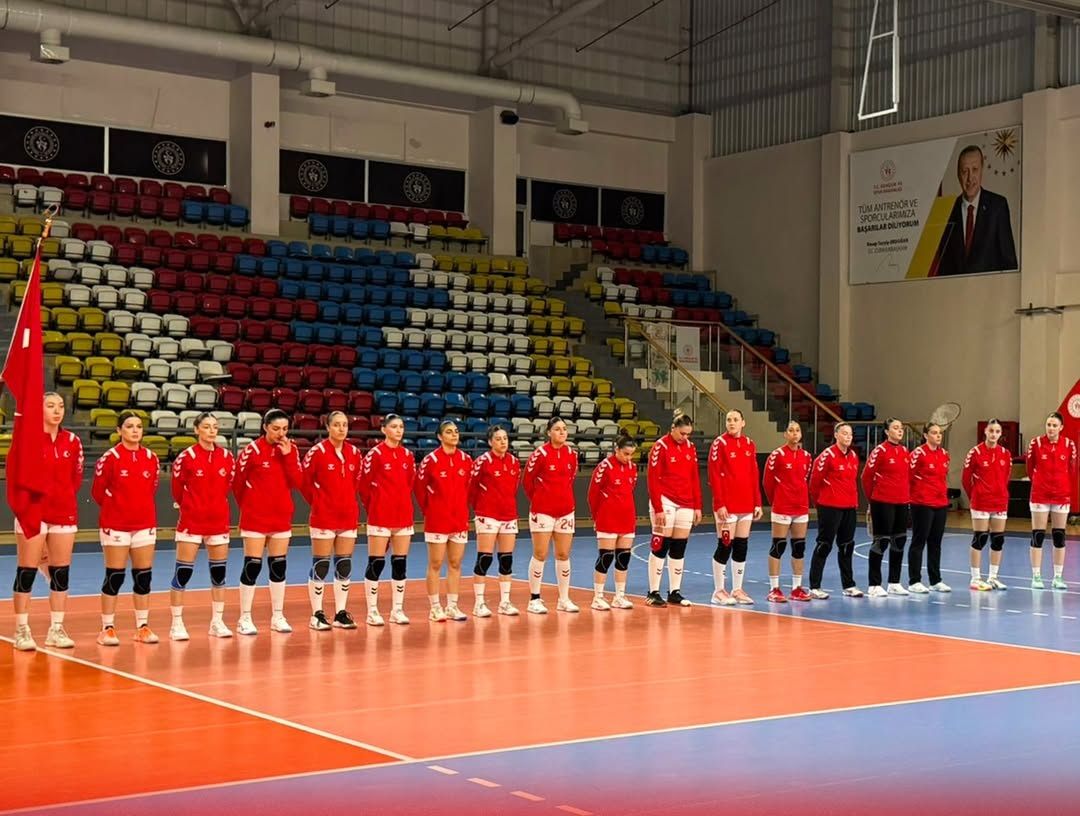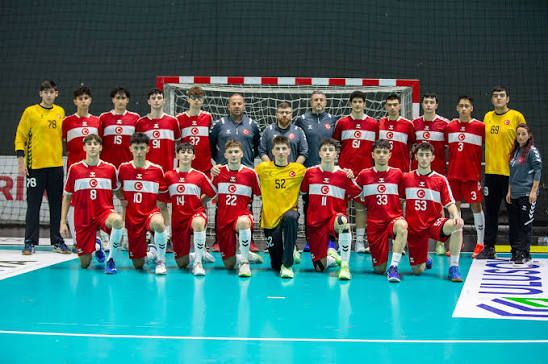
The Men's U18 National Team departed for Serbia after a final training session in Ankara, beginning the countdown to its opening match at the championship. Attention now turns to the bracket that will open up after those three group matches.
The M18 EHF EURO 2026 runs from 29 July to 9 August in Serbia, marking the first time the country has hosted the event, with the final to be played in Belgrade. The tournament is being contested by 24 teams for the second time following the 2024 expansion. But the real significance lies elsewhere: the championship also serves as qualification for the 2027 IHF U19 World Championship. In other words, the standings produced in Belgrade will determine whether this generation takes the stage at world level next year.
**The full Group B fixture list**
All six group matches will be played in Belgrade's arenas. The EHF schedule lists kick-off times in CET; since the tournament is being played during daylight saving time, Turkish local times (TSİ) are one hour ahead.
| Date | TSİ | Fixture |
|---|---|---|
| Wed 29 July | 15:30 | Germany – Italy |
| Wed 29 July | 20:45 | Serbia – Türkiye |
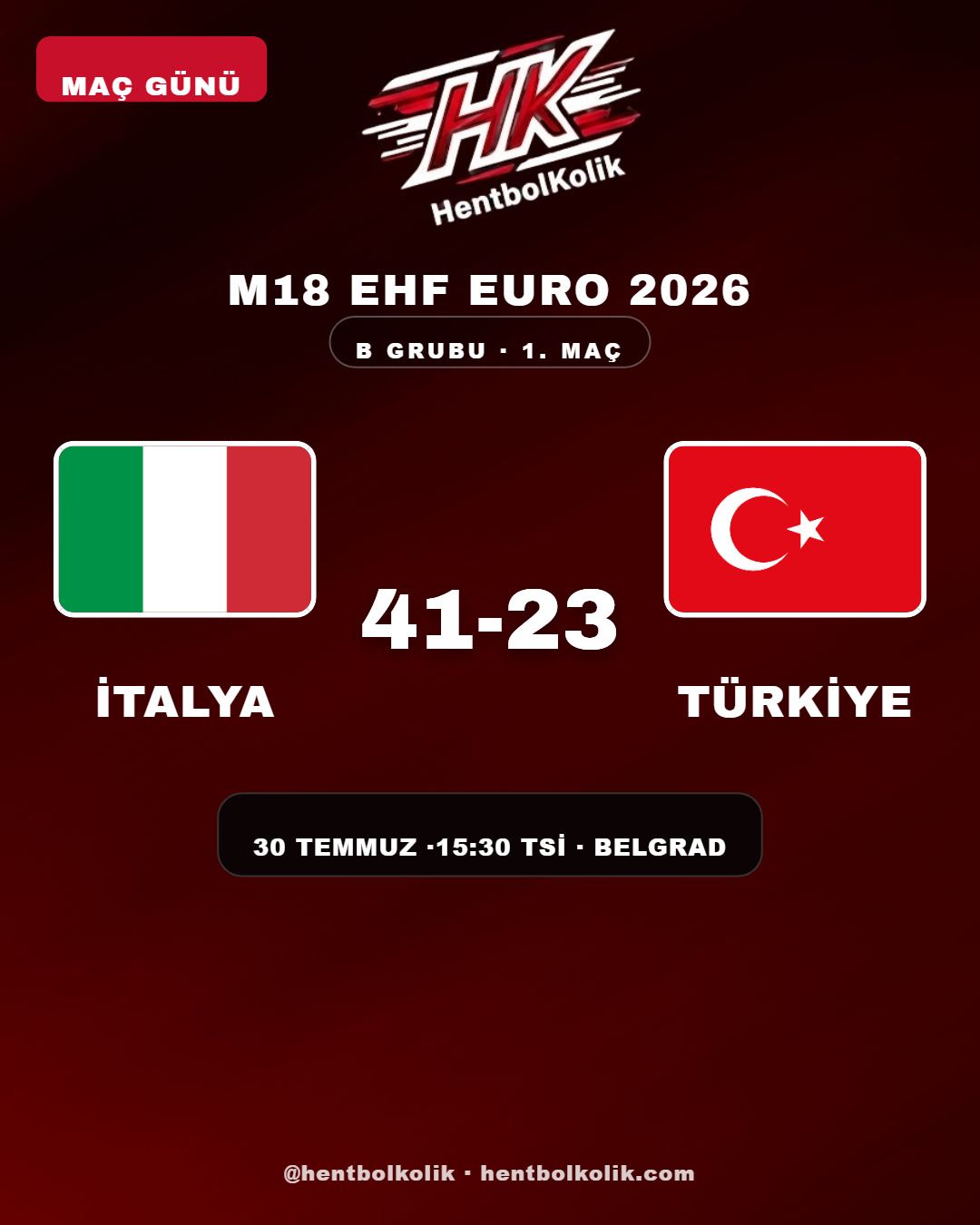
| Thu 30 July | 15:30 | Italy – Türkiye |
| Thu 30 July | 20:30 | Germany – Serbia |
| Sat 1 August | 15:30 | Türkiye – Germany |
| Sat 1 August | 20:30 | Serbia – Italy |
31 July is a rest day in the group phase. Notably, the national team will face Italy just 19 hours after finishing its match against Serbia — the tightest turnaround of the group stage belongs to Türkiye.
**What happens after the three matches?**
This time the format unfolds in three stages, producing two distinct pathways. The 24 teams have been split into six groups of four. The top two finishers in each group advance to the Main Round, while third and fourth place go to the Intermediate Round. In the Main Round, the top two from each of the three groups of four, plus the two best third-placed teams, progress to the quarter-finals, with the rest dropping into the 9-16 placement matches. In the Intermediate Round, group winners and the best runner-up can still reach the 9-16 play-off, while the remaining eight teams head to the 17-24 placement matches.
In practical terms: finishing in the top two of Group B opens a direct route to the medal path. Third place doesn't close the door entirely — topping the Intermediate Round can still lead to a place in the top 16. Fourth place, however, routes the team into the 17-24 bracket. In other words, the first three matches in Belgrade don't just decide a tournament — they decide which of three separate tournaments will be played.
Main Round and Intermediate Round matches will be played on 3-4 August, quarter-finals and cross-bracket matches on 6 August, semi-finals on 7 August, and all placement matches and finals on 9 August.
**The road to Belgrade: an Italy rematch**
The national team didn't qualify for Belgrade directly. They booked their ticket by finishing second in the qualifying tournament held in Çankaya, Ankara, in October–November 2025. After an opening 34-27 loss to Italy, the team beat Kosovo 42-28 and then edged past Romania 30-29 in a nail-biter to secure their spot in the final tournament.
That detail carries directly into Group B: Italy will face Türkiye for the second time in eight months. On paper, this is the group's most realistic target for the national team — and it also carries the weight of a rematch.
**The tournament's leading contenders**
Sweden holds the title, having beaten Denmark in the 2024 final in Podgorica to be crowned champions. This time they've been drawn in Group A alongside Slovenia, France and North Macedonia — arguably the toughest group on paper in this year's tournament.
Denmark will battle Norway, Slovakia and Poland in Group E; the clash between the two Scandinavian powerhouses already at the group stage is one of the tournament's early key fixtures. Group C features Portugal, Croatia, Czechia and Israel; Group D contains Hungary, Iceland, Switzerland and Montenegro; and Group F brings together Spain, the Faroe Islands, Austria and Finland.
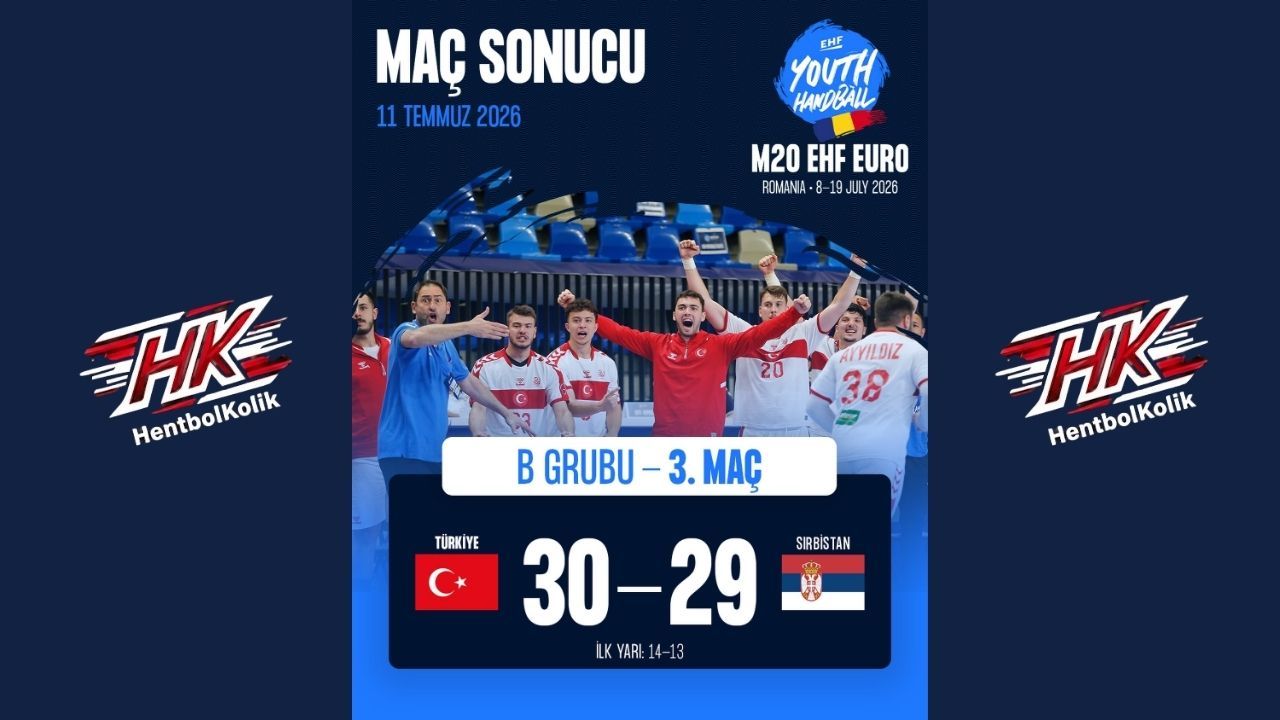
Hungary's name carries extra weight this summer: Hungary were crowned European champions at the M20 EHF EURO 2026, completed in July, beating Sweden 34-32 after extra time in the final — a strong signal that momentum in the youth ranks may be shifting toward Central Europe.
Host nation Serbia should also not be discounted from the equation — and the national team's opening match will be played right in the middle of that home crowd pressure.
What Awaits in Belgrade? U18 National Team's Group B Fixtures, Tournament Format and Favourites
The Men's U18 National Team has departed for Serbia, with the opening match tomorrow evening. But what comes after the three group games? Here's a breakdown of the mechanics of the 12 days in Belgrade, the two separate paths facing the national team, and the tournament's leading contenders.
In This Story
- Group B's six matches will be played in Belgrade on 29-30 July and 1 August; the national team faces Italy just 19 hours after the Serbia match.
- The top two finishers advance to the Main Round and the medal path; third place keeps top-16 hopes alive via the Intermediate Round, while fourth place routes teams to the 17-24 bracket.
- The championship doubles as qualification for the 2027 IHF U19 World Championship; defending champions are Sweden, while Hungary — crowned M20 European champions in July — stand out as the tournament's headline name.
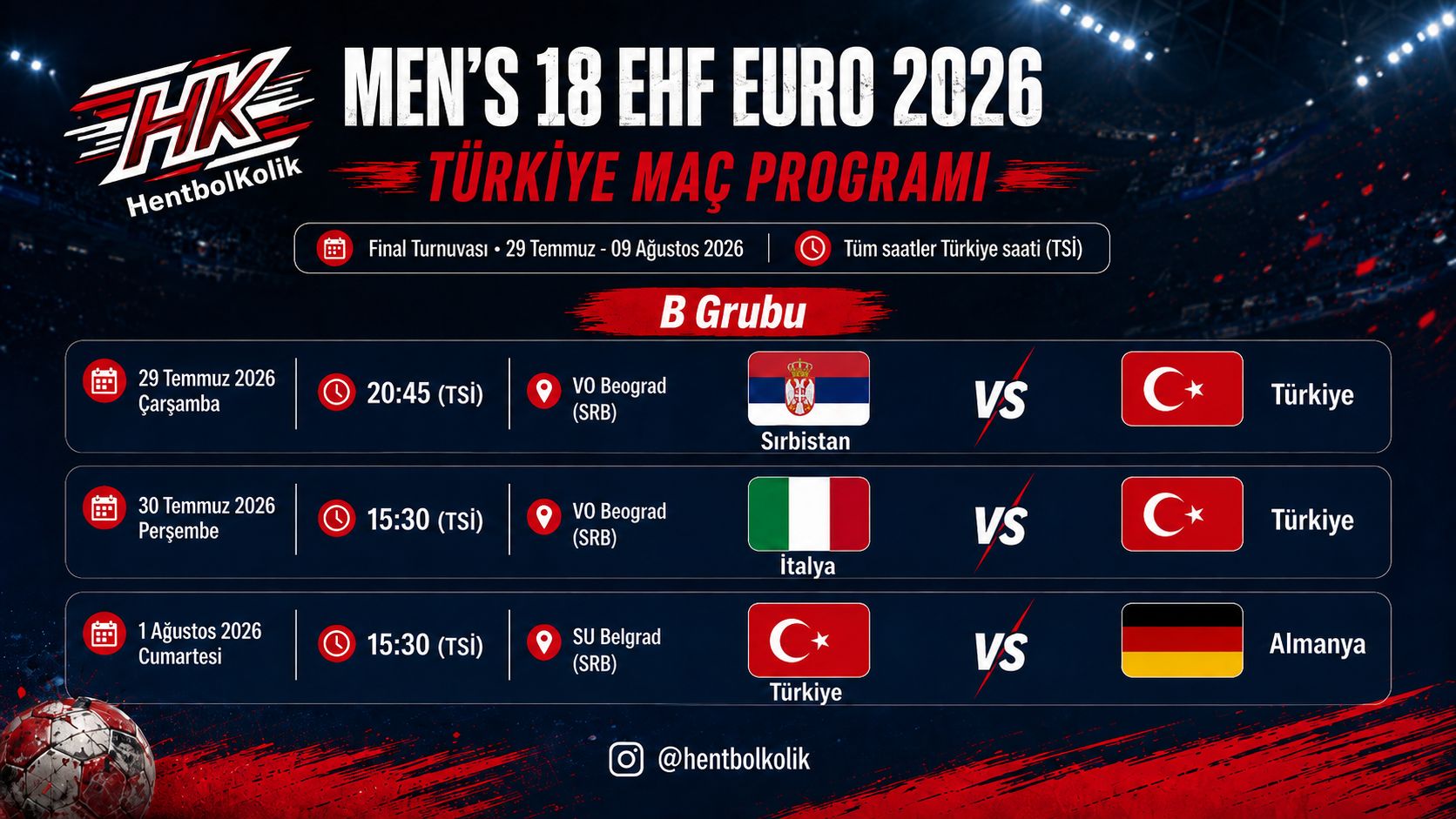
The real challenge in this group isn't the opponents' names but the schedule itself: with the Serbia match ending at 20:45 on Wednesday night and the Italy fixture kicking off at 15:30 on Thursday, the national team is left with less than a 19-hour recovery window — a test that's as much mental as physical for an 18-year-old squad. The emotional cost of the opening match against the host nation will be high, so whatever the scoreline, the crucial factor will be how the rotation is managed and how fresh the key players are heading into the Italy game. The way the defense unraveled in the second half of the 34-27 qualifying loss to Italy in Ankara, contrasted with the composure shown in carrying a one-goal margin against Romania, paints a fairly clear profile of this squad: resilient in tight matches, but fragile in maintaining defensive discipline once tempo rises. What is likely to make the difference in Belgrade, then, is goalkeeper performance and fast-break efficiency; trading shot for shot with Germany or Serbia in a set defense is not a sustainable plan, but a game model built around exploiting tempo breaks makes third place — and the top-16 route via the Intermediate Round — a highly attainable target. Zooming out, the real payoff of this tournament isn't the final standings but the road to the 2027 U19 World Championship and the match experience this generation will accumulate against top-tier opposition; considered alongside Türkiye's hosting of the Women's EHF EURO in December 2026, Turkish handball has entered an 18-month stretch in which its youth development output will be tested more visibly than ever.